Why One-on-Ones Are Failing (And How to Fix Them)

Most one-on-ones don’t fail loudly. They fail quietly.
The meeting is on the calendar. You both show up. You talk through updates. Maybe even share a few wins.
And then… nothing really changes.
No deeper clarity. No real growth. No shift in the relationship.
Just another meeting that technically happened. But the keys you read about just didn’t happen; the connection was not there. You just feel like you're checking the box but not getting the juice from one-on-ones like you think you should.
And if you’re honest, you’ve probably felt it:
“I’m doing what I’m supposed to be doing… so why does this still feel off?” You’re not alone. More importantly—this isn’t about effort.
It’s about how your one-on-ones are being experienced. Let’s look at the one-on-one framework for the results you want. This is where most leaders realize they don’t need more meetings—they need better structure inside the ones they already have. That’s exactly why I built a simple One-on-One framework that leaders can actually use in real conversations.
The Real Purpose of a One-on-One
To find out more about the person in front of you. To build trust while allowing your vulnerability to show through. Step up as a strong leader and guide this person into excelling in their career with your guidance. Letting the human connection flourish.
Most leaders were never actually taught what a one-on-one is for or how to guide one.
We default to what feels productive:
Status updates
Task tracking
Problem solving
Quick check-ins
That’s managing.
But a one-on-one isn’t meant to just move work forward. It’s meant to move people forward.
Managing vs. Mentoring
Managing asks:
“Is the work getting done?”
Mentoring asks:
“How is this person doing while they’re doing the work?”
Better one-on-one conversations are a big part of making this process successful.
5 Signs Your One-on-Ones Aren’t Working
The conversation stays surface-level.
Your team doesn’t bring real issues.
You’re doing most of the talking.
Every meeting feels the same.
Nothing actually changes after.
Why Most Leaders Get This Wrong
Most leaders are trained to focus on performance. But performance can stay strong long after engagement starts to drop.
What Great One-on-Ones Actually Do
They create clarity. They build trust. They reveal what’s not being said. They help people think.
How to Fix Your One-on-Ones
Stop leading with updates. Start with the person. Listen 75% more than talking. Don’t jump to solve problems; reframe questions to help them solve their own problems.
Use a simple framework:
What’s been on your mind lately?
What’s working?
What’s not?
What do you want more of?
What do you want less of?
If you’ve ever walked out of a one-on-one thinking, “That felt fine… but not impactful,” you’re not alone. Most leaders were never given a repeatable way to turn these conversations into something meaningful.
Final Thought
Managing keeps things moving. But mentoring shapes people. One-on-ones build trust.
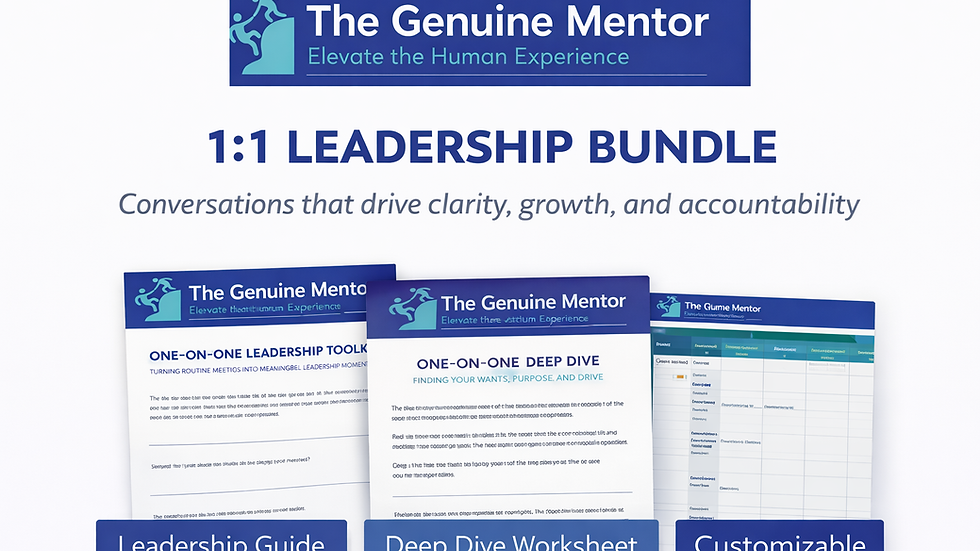
If This Resonated, Explore the One-on-One Toolkit
Instead of asking, “What’s going on this week?” try asking, “What’s been on your mind lately?” That one change alone will tell you a lot about how your current one-on-ones are really working.
Turn Your One-on-Ones Into Real Leadership Conversations
If this resonated, you don’t need more theory—you need something you can actually use in your next conversation. Inside the One-on-One Toolkit, I walk you through:
A simple structure that keeps conversations focused but natural.
Questions that move beyond surface-level updates.
A repeatable way to build trust, clarity, and growth over time.
It’s designed for real leaders, in real conversations—not perfect ones.
👉 Explore the One-on-One Toolkit here:


Comments